Online casinos continue to play a major role in the global entertainment industry. Players from around the world are constantly on the lookout for secure and reputable platforms where they can enjoy games and potentially win money without exceeding their budgets. Both Canada and the US offer diverse online gambling landscapes, each with its own strengths, regulations, and innovations that appeal to different types of players.
This article breaks down the technical and regulatory contrasts between the two markets, offering insight into how each country is shaping the future of digital gambling.
Who Makes the Rules?
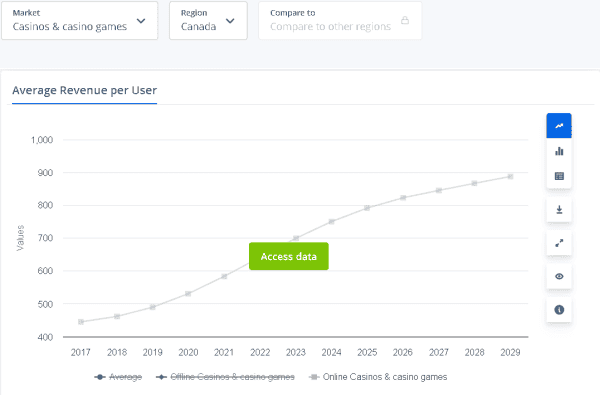
The players’ revenue from online casinos is on the rise. Regulatory frameworks in American and Canadian casinos affect these numbers; the regulations themselves are similar in some ways and different in others.
In the US, they vary from state to state. Some examples:
- Nevada. This state is mostly known for its land-based casinos; only poker is allowed as a form of online gambling.
- New Jersey. In this state, the gambling sphere follows the regulations imposed by the New Jersey Division of Gaming Enforcement: this party is responsible for issuing licenses.
- Pennsylvania. The gambling operators obey the Pennsylvania Gaming Control Board, which controls gambling and sports betting.
In Canada, the regulations vary from province to province:
- Ontario. All gambling operations are handled by iGaming Ontario (iGO), which vets the operators.
- British Columbia. The British Columbia Lottery Corporation runs the official casino in the region and controls other gambling operations.
- Quebec. The operators have to obey the regulations of Loto-Québec if they want to work in this industry.
The difference between the US and Canada is that Canadian regulations are looser. Also, Canadian casinos address requests more quickly. For instance, PlayOjO withdrawal time tends to be instant, while American players might have to wait for longer periods. The gambling industry in Canada is more player-friendly in this regard.
Software & Infrastructure
All casinos rely on innovative software solutions. Both the US and Canada are always looking for advanced software and infrastructure to deliver the best experience to their players.
The US software developers have an average salary of $144K per year. It’s a respectable profession, and American casinos tend to choose the most reliable operators to work with. Some notable examples include Scientific Games, Evolution Gaming, NetEnt, etc. Canada partners with PlayTech and Microgaming, who are also considered the market leaders.
Here are other gambling software and infrastructure similarities between these two countries:
- Games. The US and Canada favor slots, live dealer games, and poker rooms.
- Security. Both regions use SSL encryption and firewalls to protect their users’ privacy.
- Mobile gaming. American and Canadian casinos optimize their gambling platforms for mobile users first and foremost.
As for differences, they can be seen in the following categories:
- Betting rules. The US has higher wagering requirements due to complicated tax laws, while Canada is more laid-back.
- Infrastructure. Most American casinos use the platforms within the specified states; in Canada, there are cases of international hosting since there are fewer gambling restrictions.
- Software providers’ presence. In America, game providers must get a state-based license first, while Canada welcomes experienced operators universally.
These differences are another reason many players prefer the diversity of Canadian platforms.
Responsible Gambling
Every good casino is concerned about its players’ safety. Both Canada and the US rely on advanced encryption standards, such as SSL and TLS, as well as AI-powered detection tools to prevent fraud. Any suspicious behavior of the player can lead to an instant block. The players have to undergo biometric login authentication to prove their identity in most casinos.
The best platforms also try to protect players from themselves. The US has launched the National Council on Problem Gambling helpline for American residents. In Canada, players can engage in self-exclusion programs or enroll in GameSense, which offers education on responsible gaming. The Canadian government is more focused on fighting gambling addiction among its people.
Payment Flow
How the US and Canada process payments differs. This is how the US approaches it:
- Payment methods. American casinos support e-wallets like PayPal and Skrill, and they accept bank transfers, credit or debit cards, as well as prepaid cards.
- Crypto payments. American regulations restrict the usage of cryptocurrencies in gambling.
- KYC/AML compliance. There is a strict verification protocol, which affects the speed of withdrawals.
- Withdrawal speed: It depends on the state and the casino, but usually, payments happen within a day or two.
User trust is moderate as many players prefer complete anonymity, which few US casinos can ensure.
This is how Canada processes payment flows:
- Payment methods. Casinos support Interac, the Canadian local payment method, in addition to PayPal, credit cards, and cryptocurrencies.
- Crypto payments. Many casinos work with cryptocurrencies, especially Bitcoin and Ethereum.
- KYC/AML compliance. It’s less strict in Canada.
- Withdrawal speed. The money arrives instantly or within a day.
User trust is high, which is why players worldwide are interested in Canadian casinos.
What Players Actually Want

In both American and Canadian gambling fields, casino games are the most popular form of entertainment, with lotteries taking second position and sports betting coming in third. Player preferences are similar in nature.
The players’ age is another point of similarity. In America, the average age of gamblers is under 42 years old. The latest available Canadian survey showed that 59 percent of Canadians who participated in gambling were aged between 18 and 34.
Given that many players in both the US and Canada are older millennials or Gen Xers there’s growing interest in more sophisticated features like a Luxury casino bonus, which caters to players looking for curated, high-value rewards rather than just basic sign-up offers.
Mobile gambling is popular in both regions, too. In fact, the number of mobile gambling apps was predicted to reach a record 150 billion downloads in 2024, with both the US and Canada getting significant contributions from it.
In the US, national commercial gross gaming revenue reached 66.65 billion dollars in 2023, while Canada stands at $16.37 billion. The size of both regions plays a big role in the difference between their revenues.
Most players are younger adults who want to access standard casino games through their phones.