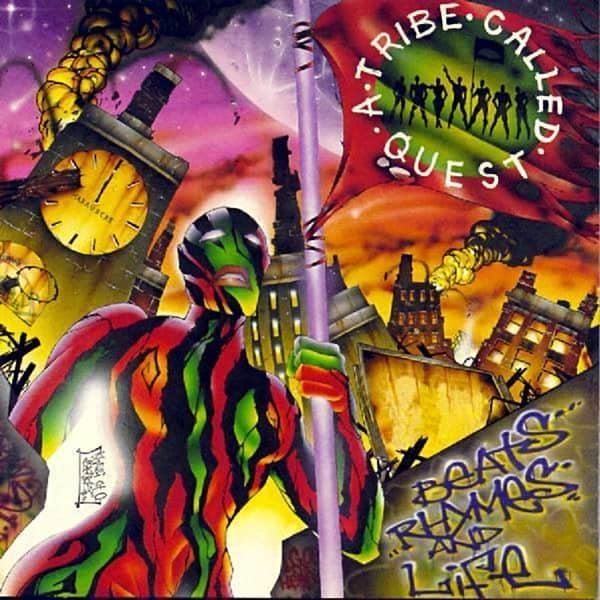
On July 30, 1996, A Tribe Called Quest released their fourth studio album, Beats, Rhymes and Life, a project that marked both a sonic shift and a personal crossroads for one of the most respected groups in Hip Hop history.
Coming off the critical acclaim of their first three LPs (People’s Instinctive Travels, The Low End Theory, and Midnight Marauders), Beats, Rhymes and Life arrived with high expectations. But what Tribe delivered was something noticeably different; darker, more introspective, and reflective of the internal changes within the group itself.
Produced largely by The Ummah, a new production collective led by Q-Tip, Ali Shaheed Muhammad, and a then-rising Detroit beatmaker named J Dilla, the album traded in some of the jazz-infused warmth of earlier projects for a more stripped-down, brooding aesthetic. The beats were more subtle and mood-driven, showing the early brilliance of Dilla’s influence. The content was also more serious, at times distant, echoing growing creative tensions and Q-Tip’s own spiritual transformation.
The album debuted at No. 1 on the Billboard 200 and was certified platinum, proving Tribe’s fanbase was still very much intact. Standout tracks like “Stressed Out” featuring Faith Evans and “1nce Again” featuring Tammy Lucas offered insight into the group’s evolving sound and identity. Phife Dawg, returning from his home in Atlanta, brought a different energy, both defiant and contemplative, that contrasted with Q-Tip’s more reserved delivery. Jarobi, having left after the first album, was still absent, and the chemistry that once felt effortless now felt tested.
Despite the internal dynamics, Beats, Rhymes and Life holds its place as a pivotal moment in Tribe’s legacy. It wasn’t just a musical evolution; it was a snapshot of growth, maturity, and the complexities that come with long-term success and changing priorities. Over time, the album has gained more appreciation for its vulnerability and its role in introducing J Dilla to the broader Hip Hop world.
Twenty-nine years later, Beats, Rhymes and Life remains a reminder that even the most beloved groups must navigate change and sometimes, that change becomes a part of what makes their story worth telling.
Rest in peace to Phife Dawg. Long live the Tribe.