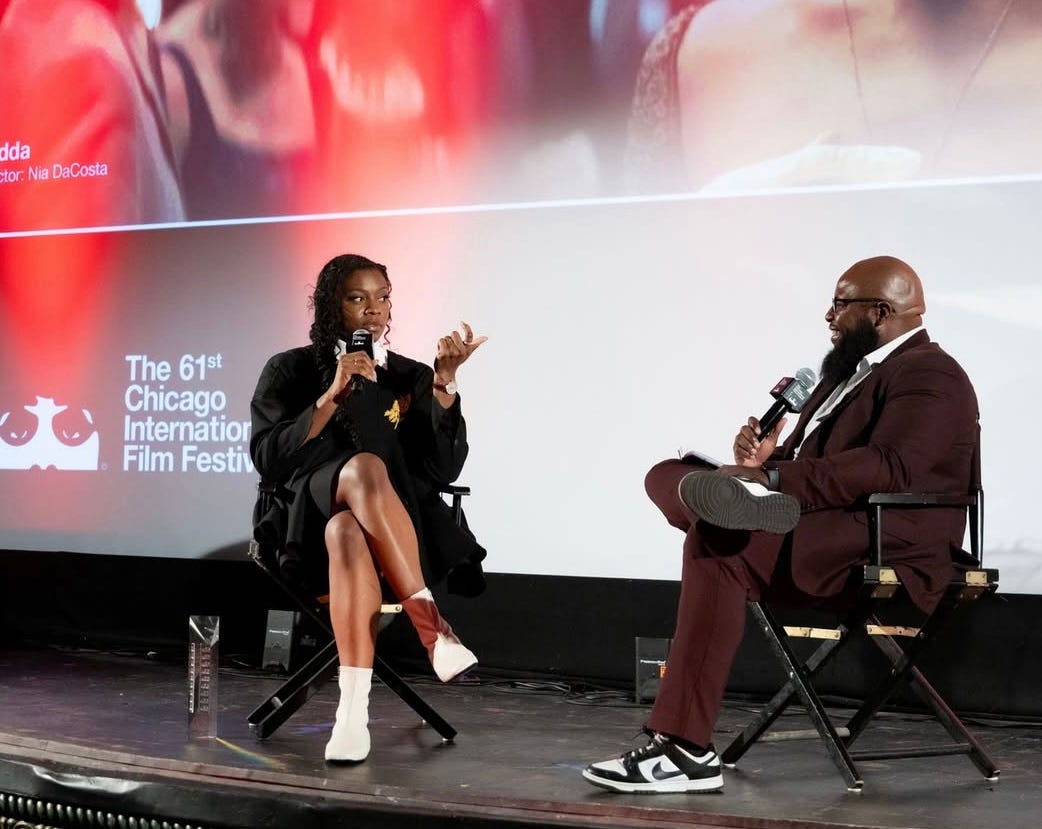
Words by: Brandon Pope
You’re hard pressed to find another movie like Nia DaCosta’s Hedda this year, a daring and psychologically challenging adaptation of Henrik Ibsen’s Hedda Gabler.
In Hedda, Tessa Thompson stars as the enigmatic Hedda Tesman, a woman caught between societal expectations and her own restless desires. DaCosta’s reimagining trades 19th-century Norway for a sleek, 1950’s Britain where the pressures of perfection, identity, and control feel eerily familiar. The result is a film that hums with gothic unease and emotional precision. It’s a study of power, freedom, and the quiet rebellion of women who refuse to be contained.
As a Chicago journalist who’s long been drawn to stories of resilience and reinvention, I find DaCosta’s work deeply resonant, both in how it wrestles with weighty issues like class and identity, and how it dares to find humanity in the shadows of our darkest selves. What follows is an abridged version of our Chicago International Film Festival conversation about reimagining Hedda through a contemporary lens, the creative risks of adaptation, and the emotional truths that anchored her writing.