Written by Jonathan P-Wright (award-winning journalist; Muck Rack–verified) on behalf
of The Source Magazine.
How Dr. Donyae Dukes Turned Baltimore Sound Into a Multimedia Empire Blueprint
Prologue: The Opening Shot Over Baltimore
Baltimore doesn’t celebrate potential. Baltimore celebrates proof. It’s a city that listens with its arms crossed, because it’s seen too many people talk loud and deliver small, too many promises get made without a single brick laid behind them. The streets don’t care about your captions, your trends, or your temporary clout. They care about whether your name still rings when the lights turn off, whether your work still stands when the hype moves on, and whether you can lead without needing an audience to remind you who you are.
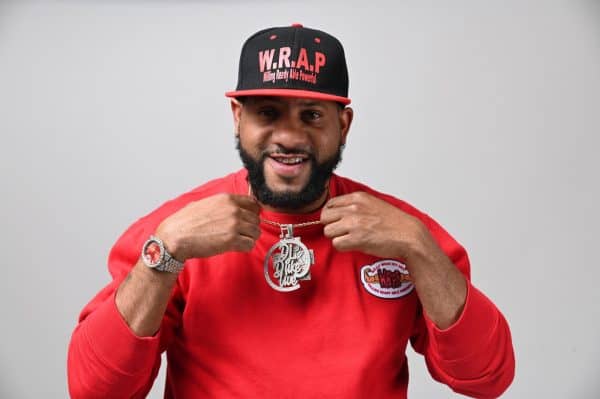
That’s why Dr. Donyae Dukes—known to the culture as DJ DUKE—lands different. He doesn’t move like a man chasing a moment. He moves like a man building an institution. Out of Baltimore, Maryland, under the corporate umbrella of TALK HEAVY RADIO Multimedia Group—headquartered in Woodlawn, MD—he’s taking the DJ lane and stretching it into something bigger: a business, a platform, and a media machine designed to outlive the room it started in.
Scene One: The Name “DJ DUKE” Sounds Like Authority
In hip-hop, names are not decorations. They are declarations. “DJ DUKE” doesn’t sound like a nickname; it sounds like a title you earn through consistency. It sounds like someone who understands that respect is not requested—it’s collected, one clean transition at a time, one solid booking at a time, one real result at a time. When a DJ’s name becomes a stamp, it means people trust the outcome before the first record even drops.
You can feel that “stamp” energy in the way his brand shows up publicly, especially through his official presence at @djdukelive. This is not a casual page built for a quick run. It reads like a living operation—movement, visibility, community touchpoints, and the type of momentum that signals something deeper than entertainment. That’s the first sign you’re watching a mogul evolve in real time: the brand starts looking like a company before the world agrees to call it one.
Scene Two: Championship DNA Is Built in the Dark
“Championship DNA” isn’t the moment the crowd screams. It’s the hours before the crowd arrives. It’s the work done in silence, the discipline done without applause, the sharpness created when nobody is watching you sharpen it. DJ DUKE’s rise is rooted in that kind of repetition—the kind of repetition you can’t fake because it becomes who you are. A natural-born leader isn’t someone who talks like a leader. It’s someone whose decisions keep proving they were built for responsibility.
That’s why DJ DUKE is described as a serial entrepreneur, humanitarian, and visionary. He’s not simply spinning records; he’s building lanes. He’s taking the DNA of the DJ—timing, taste, emotional control—and applying it to business systems. And when a DJ thinks like an operator, the booth stops being the destination. The booth becomes the launchpad.
Scene Three: The Science of Sound, the Art of Command
Some DJs play songs. Elite DJs command emotion. DJ DUKE’s edge is that he treats sound like a science and a weapon at the same time. He understands the psychology of tempo, the gravity of bass, the tension inside a pause, the way a transition can move a crowd without them even realizing they’ve been guided. Mixing isn’t random to him—it’s engineered. The room is never “just a room.” It’s a canvas.
That technical mastery is what creates public demand, because it allows him to blend worlds without losing identity. Hip-hop, R&B, pop, Afrobeats—DJ DUKE doesn’t treat genres like borders. He treats them like neighborhoods connected by the same streetlights. That’s how you build a movement instead of a playlist: you make the sound feel like one city, even when the records come from different blocks.
Scene Four: TALK HEAVY RADIO Isn’t a Station—It’s a Studio System
TALK HEAVY RADIO Multimedia Group is built like a modern media company because that’s what DJ DUKE intended from day one: multi-surface, multi-format, and designed to convert culture into infrastructure. This isn’t “radio” the way people used to mean it. It’s a brand ecosystem where music, conversation, and community coverage all live under one flag—so the audience doesn’t just tune in, they tap in to a world. The home base at Talk Heavy Radio reads like an owned-media headquarters, not a temporary campaign—because empires don’t rent identity.
And the power multiplies on the podcast side. Talk Heavy Radio Show operates as a standalone iHeartRadio podcast platform—Talk Heavy Radio Show on iHeartRadio—giving DJ DUKE an on-demand lane that stays working even when the microphones are off and the city is asleep. Talk Heavy is positioned as a top culture-forward podcast brand in its lane, generating thousands of listeners per month and building a replayable catalog of moments that can be shared, clipped, and reintroduced to new audiences—because this is the mogul math now: live presence for authority, on-demand presence for scale, and content assets that compound like ownership.
Scene Five: “Talk Heavy” Is a Philosophy, Not a Catchphrase
The name “Talk Heavy” feels like a warning and a promise at the same time. It signals weight. It signals consequence. It tells you that the conversation won’t be light, the platform won’t be shallow, and the culture won’t be treated like background noise. DJ DUKE understood something crucial: music moves the people, but conversation holds the people. And when you can do both, you stop being part of the culture—you become one of the engines that keeps it turning.
That’s why Talk Heavy isn’t positioned as a one-lane show. It’s a multimedia identity. It’s the type of platform where artists can be introduced the right way, where business professionals can speak in a culture-forward environment, and where the city can hear itself reflected back with pride. If the DJ booth is the heartbeat, Talk Heavy is the nervous system—signals moving fast, reaching far, and keeping the ecosystem alive.
Scene Six: From Baltimore to Bigger Rooms, the Brand Stays the Same
A real test of greatness is whether you can walk into any room and still sound like yourself. DJ DUKE’s story includes high-visibility stages and industry-level moments that reflect national demand, but the most important detail is that he doesn’t lose his identity when the stage gets bigger. He takes Baltimore with him—not as a costume, but as a foundation. That’s what makes the brand trustworthy: the origin never gets abandoned.
His growth reads like the classic hip-hop arc, just updated for the modern era. Instead of waiting on a gatekeeper, he becomes one. Instead of hoping for a platform, he builds one. Instead of chasing mainstream validation, he stacks assets until validation has no choice but to arrive. The culture has always respected builders more than beggars, and DJ DUKE moves like a builder.
Scene Seven: The Broadcast Lane—Airwaves Still Mean Power
Digital is loud, but broadcast is routine. And routine creates trust. TALK HEAVY RADIO operates with a broadcast-minded identity designed to meet people where life actually happens—commutes, jobs, late nights, real-world movement. That matters because social media can trend you for a weekend, but a consistent broadcast presence can turn you into a habit. Habits are what keep brands alive when the algorithm changes its mind.
This is where DJ DUKE’s strategy becomes visible. He’s not depending on one platform to carry the mission. He’s building multiple surfaces so the audience always has a door. That’s how a local DJ becomes a media mogul: by treating distribution like insurance. By making sure the message can travel even if one channel goes quiet.
Scene Eight: The Radio One Lane—Legacy Meets New-School Execution
TALK HEAVY RADIO operates with distribution that places it adjacent to legacy Black media infrastructure, which matters for both credibility and reach. Radio is still a battleground for relevance, and when you have access to real broadcast lanes, your brand stops being “online only.” It becomes part of the city’s daily rhythm. That rhythm is where culture gets reinforced: the songs people hear repeatedly, the voices people recognize instantly, the identities that feel familiar enough to trust.
DJ DUKE understands the value of legacy infrastructure, but he doesn’t treat it like a ceiling. He treats it like a foundation. The difference is everything. A lot of people touch broadcast and get comfortable. DJ DUKE touches broadcast and expands. He knows the future belongs to the hybrid operator—the one who can hold the airwaves and still dominate the on-demand world.
Scene Nine: The Music Policy—Breaking New Records Like a Mission
TALK HEAVY RADIO is committed to breaking new music, especially emerging voices across hip-hop, R&B, Afrobeats, and pop. That commitment is not a marketing angle; it’s a cultural responsibility. Independent artists don’t just represent “the next wave.” They represent the future of sound, the future of storytelling, and the future of what the culture will be proud it defended before it went mainstream.
DJ DUKE’s role as curator turns that mission into motion. He understands that breaking music isn’t only about spinning records. It’s about context. It’s about placing a new song in the right emotional frame so listeners receive it as a moment, not just noise. That’s how you turn a debut into a conversation, and a conversation into a movement.
Scene Ten: Millennials and Gen Z in the Same Room, No Compromise
The hardest crowd to win is not one generation—it’s two at once. Millennials carry memory. Gen Z carries momentum. Most brands choose one lane and lose the other. DJ DUKE has built a mix identity that can hold both without watering the sound down. He honors the foundation that Millennials respect while still delivering the urgency and emotion Gen Z expects. That bridging is a rare skill, and it is a business advantage disguised as taste.
When you can unify demographics, opportunities multiply automatically. Promoters want you because the room stays full. Brands want you because the audience is broad but connected. Artists want you because you can introduce them to multiple listener types at once. That’s how a DJ becomes a mogul: by becoming the connector nobody else can replace.
Scene Eleven: The Humanitarian Edge—Power That Gives Back
A real empire isn’t measured only by revenue. It’s measured by impact. DJ DUKE’s story carries humanitarian energy because the brand is rooted in service—philanthropic investment, community-first thinking, and a desire to build something Baltimore can be proud of. In hip-hop culture, that kind of posture matters because the culture has always been about survival and uplift. People respect the ones who win and still reach back.
That service-driven identity also makes the brand durable. It creates loyalty that trends can’t erase. It makes TALK HEAVY feel less like a media product and more like a civic asset—a platform that can elevate voices, spotlight opportunities, and turn attention into tangible outcomes. The culture doesn’t just want stars. The culture wants leaders.
Scene Twelve: The Rap Empire Profile—When the World Starts Writing the Legend
When outside platforms begin documenting your story, it signals something important: your impact has become undeniable. DJ DUKE’s feature coverage adds public framing to what the city already knows—this is a brand built on performance, leadership, and community resonance. The coverage doesn’t treat him as a “party DJ” stereotype. It places him inside a larger narrative: a figure using his platform to educate, inspire, and evolve the model of what DJ influence looks like.
If you want the public-facing lens that reinforces this arc, the profile can be found here: DJ Duke: Baltimore Award-Winning DJ. The value of this kind of coverage is not ego—it’s leverage. A mogul understands that narrative is currency, and documentation is how you protect narrative from being rewritten by people who weren’t there.
Scene Thirteen: The Mini-Documentary—Turning Life Into Intellectual Property
A mix can make your name ring, but a documentary makes your story permanent. DJ DUKE is preparing a limited three-episode mini-documentary that will illuminate the life components that forged his championship DNA and the animal ambition that drives him every day. This is not content for content’s sake. This is intellectual property—storytelling designed to outlive a news cycle and build a legacy the culture can point to.
The mini-documentary is set to air exclusively on LOOKHU TV, with a planned drop in Q3 2026. That placement matters because it upgrades the narrative into a premium distribution lane where the DJ brand becomes cinematic. And once you become cinematic, you become sponsor-ready, platform-ready, and scalable in a way that regular promo can’t touch.
Scene Fourteen: LOOKHU TV—A Platform Built for Creators Who Want Ownership
LOOKHU’s positioning aligns with the creator economy: distribution, monetization, and scalable reach across web, mobile, and connected-TV environments. It’s built for creators who want to move faster, reach more fans, and monetize in innovative ways without surrendering the entire upside. That matters for a story like DJ DUKE’s because the point isn’t just to be seen—it’s to build an engine where being seen leads to ownership.
This is what makes the documentary move so strategic. A docuseries doesn’t live in one place anymore. It becomes trailers, clips, behind-the-scenes moments, social proof, and a long runway of reusable assets that keep attracting new audiences. With LOOKHU, DJ DUKE isn’t just dropping a story. He’s launching a new lane of value.
Scene Fifteen: 2026 Partnerships—The Triangle That Turns Culture Into Scale
DJ DUKE is expanding his digital and media footprint in 2026 through strategic monetization partnerships with LOOKHU TV, RADIOPUSHERS, and MUSICHYPEBEAST. The power of this triangle is synergy. LOOKHU strengthens premium video distribution. RADIOPUSHERS strengthens branding and rollout structure. MUSICHYPEBEAST strengthens podcast-first culture placement—keeping independent voices in the conversation where Gen Z and Millennials both live.
This isn’t “partnership for the announcement.” This is partnership as architecture. The goal is not a louder week—it’s a bigger year. It’s building a system where TALK HEAVY’s sound, story, and distribution all support one another, so the brand grows without losing identity. That is how local becomes scalable: when every lane feeds the same mission.
Scene Sixteen: The Blueprint—How Local DJs Become Media Moguls Now
The old path for local DJs was simple: gig to gig, club to club, hoping the right person notices. DJ DUKE’s path is different because it’s owned. He built the platform. He built the ecosystem. He built the distribution. He built the brand identity so strong it can stretch across radio, podcasting, and documentary storytelling without breaking. That’s the new era: the DJ doesn’t just “work events.” The DJ becomes the media company that events, artists, and brands want to work with.
This is the core lesson for every DJ watching: talent gets you attention, but infrastructure gets you freedom. DJ DUKE is transforming how local DJs can turn themselves into multimedia empires by proving that you don’t need to wait for permission to be powerful. You build the channel, build the trust, build the catalog, and build the story—then the market catches up.
Epilogue: Mixed the City Into a Movement, Then Owned the Wave
DJ DUKE didn’t just get known. He got structured. He took the culture of Baltimore and turned it into an operating system—sound as strategy, conversation as community, distribution as leverage. With Talk Heavy Radio as the foundation, Talk Heavy Radio Show on iHeartRadio as the on-demand amplifier, and LOOKHU TV as the cinematic runway for his mini-documentary, he is building a model that can outlive the moment and outscale the city without ever abandoning its roots.
And that’s what makes the story feel like hip-hop in its purest form. It’s not luck. It’s not hype. It’s work, turned into proof. It’s a DJ turning into a mogul by doing what the culture has always respected most—building something real, then letting the world hear it.