
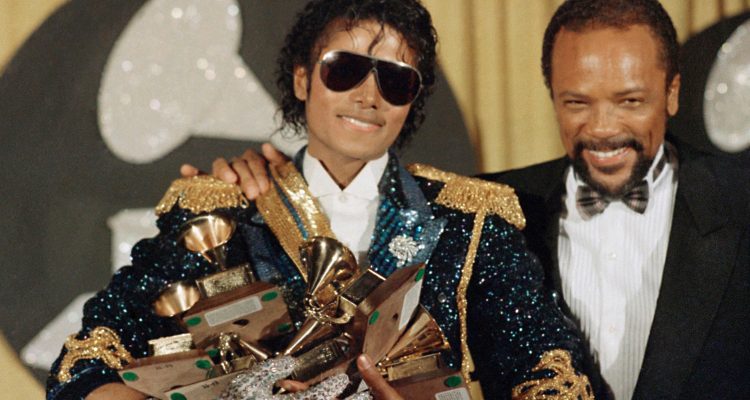
Quincy Jones lost a $6.9 million appeal against Michael Jackson’s estate.

A three-judge panel of the secnd Appellate District overturned a chunk of a 2017 jury verdict, discovering the jury misinterpreted Jones’ contract.
Jones’ attorney argued the producer was owed $30 million in royalties and other income from the This Is It project, two Cirque du Soleil shows, and other revenue made from Jackson following his 2009 death.
In addition, Jones was granted $5.3 million in joint venture profits under his producer contract.
The trial went on for two weeks and Jones was granted $9.4 million. But an appeals court took more than half of that back on Tuesday, noting that Judge Michael L. Stern allowed the jurors to interpret the contract instead of doing it for them.
The appeals court ultimately decided that Jones wasn’t entitled to such an increase. “The language of section 4(a) cannot be tortured to mean that Jones’s maximum royalty rate increased proportionally if Jackson’s maximum royalty rate increased,” wrote Justice Judith Ashmann-Gerst, on behalf of a unanimous panel.
An additional $1.6 million was vacated for remix fees that Jones claimed he was owed. But the courts ruled that he shouldn’t be paid fees for remixing work he didn’t perform because he wasn’t rewarded refusal of remixes of his Jackson albums. “The only compensation Jones was entitled to receive was royalties from record sales on remixes, and the evidence indicates he received them,” Ashmann-Gerst wrote. “If he wanted remixing fees, he had to negotiate them in separate agreements.”
Quincy Jones was left with a cool $2.6 million which consisted of unpaid licensing fees from This Is It among other things.
Howard Weitzman, who represented the Jackson estate, issued a statement claiming vindication.
“Quincy Jones was the last person we thought would try to take advantage of Michael Jackson by filing a lawsuit three years after he died asking for tens of millions of dollars he wasn’t entitled to,” Weitzman said. “We knew the verdict was wrong when we heard it, and the court of appeal has completely vindicated us. From the beginning this was an attempt to take advantage of Michael knowing he wasn’t here to defend himself.”
John Branca, co-executor of the estate, also issued a comment: “So many people have tried to take advantage of Michael and mischaracterize him since his death. It’s gratifying that in this case the court in an overwhelmingly favorable and just decision, recognizes that Michael Jackson was both an enormous talent and an extremely fair business executive.”
