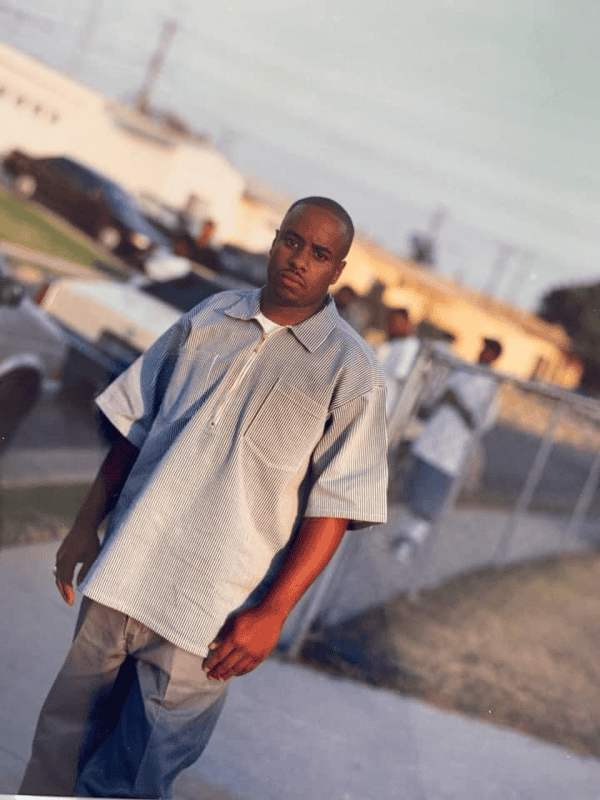
A polished hip-hop editorial highlighting cadence, storytelling, and the rise of OG CUICIDE. All views and words expressed within this article were written by American Journalist Jonathan P-Wright (Muck Rack verified: Jonathan P-Wright’s Profile | RNH Magazine, RAISING THE BAR (Podcast) Journalist | Muck Rack
🎤 The Voice of Compton’s Resilient Streets
Compton isn’t just a city—it’s a cultural megaphone that has amplified the realities of the streets to the world. The foundation of that legacy begins with N.W.A.—Ice Cube, Dr. Dre, Eazy-E, MC Ren, and DJ Yella—who detonated the music industry in the late 1980s with Straight Outta Compton. They exposed systemic oppression, police brutality, and racial profiling with unflinching candor. Their single “Express Yourself” revealed something equally important: the power of content. Built on the groove of Charles Wright & the Watts 103rd Street Rhythm Band, the track went radio-friendly while still delivering a rebellious manifesto—teaching the next generation that you can speak unapologetically, creatively, and still hit the mainstream.
From there, Compton kept feeding the culture. DJ Quik infused virtuoso musicianship into G-funk; MC Eiht brought slow-burn authenticity; The Game re-centered the West in the 2000s; YG brought Compton anthems to stadiums; Vince Staples added razor-sharp social commentary; DJ Mustard created a global bounce sound; Tyga delivered crossover hits; Yo-Yo amplified women’s voices in West Coast rap; while TQ and Buddy brought melody, range, and genre-fluidity.
It’s in this continuum that OG Cuicide stands—not just another rapper from Compton, but a suicide survivor, humanitarian, and messenger who transformed his internal pain into external promise, carrying the same “express yourself” ethos into his fight for mental health and suicide prevention.
💔 From Internal Pain to External Promise
OG Cuicide’s story is more than survival—it’s mental sovereignty. At 22, when despair convinced him there was no tomorrow, he pulled the trigger in a suicide attempt. Against all odds, he lived. That moment became the crucible that tested and revealed the strength of his character.
From then on, every breath became a contract with resilience. He rebuilt his mind like an athlete rebuilding a broken body. Therapy, prayer, long studio sessions, and community work became his discipline. Where most would fold into the shadows of shame, OG Cuicide chose to stand in the light of testimony. He learned to name the darkness without bowing to it, to transform hopelessness into lyrics that millions could feel.
His willpower is stitched into his artistry. In songs like “Tragedy”, he doesn’t romanticize pain—he documents it with surgical honesty, then points listeners toward survival. On his Instagram reels, he shares his personal phone number, offering himself as a lifeline to strangers. That kind of courage—handing out your number to anyone drowning in silence—isn’t performance. It’s proof of a man who has found light within unparalleled darkness and refuses to keep it to himself.
This transformation is why his mantra—Never Give Up—hits harder than a slogan. It’s not branding. It’s a battle cry, rooted in lived experience, forged in the fire of pain, and proven every day he wakes up and chooses purpose over despair.
🎶 Mentored by Legends, Forged by Struggle
Survival led him to creation. Under the guidance of his godfather Leon Haywood, he signed with Evejim Records and dropped his debut Final Exit (1995). The project mirrored the razor’s edge between death and determination, capturing the chaos of his youth with the clarity of rebirth.
He collaborated with DJ Yella, King Tee, Big Syke, BG Knocc Out, and Dresta Gangsta. His work appeared alongside Spice 1, Too Short, WC, E-40, Mack 10, Kurupt, and Richie Rich. Tours across Japan, France, and Germany followed, proving his testimony translated worldwide.
📰 One West Magazine: A Megaphone for the Underdog (Legacy Expanded)
When OG Cuicide launched One West Magazine, he wasn’t just starting another publication—he was building an infrastructure for the unheard. Branded as the premiere go-to source for the latest in West Coast Hip-Hop news, fashion, and entertainment, the platform set itself apart by placing independent artists and content creators at the center of the conversation, not at the margins.
For more than 20 years, One West Magazine has served as a cultural archive, uplifting voices from Compton, Watts, South Central, Long Beach, and the entire L.A. basin, while extending its reach to every corner of California and, ultimately, the world. Its dual model—print/digital with newsstand distribution—meant that artists from the block could walk into a corner store and see themselves represented alongside national icons. That visibility is priceless in neighborhoods where recognition is often the first currency of survival.
The platform’s editorial DNA blends industry credibility with community-first journalism. Features and interviews have spotlighted household names like Russell Simmons, while simultaneously breaking emerging talent from places as far as Germany, Puerto Rico, and London. Every story is treated with respect, whether it’s a chart-topping MC or a kid pressing mixtapes out of his trunk in Compton. That balance is why One West has been called one of the flagship publications for independent hip-hop worldwide.
The legacy of One West Magazine is measured not just in pages published, but in careers it has jumpstarted. Countless indie rappers, producers, and entrepreneurs have cited their One West feature as the first stamp of credibility that pushed them toward tours, label deals, and brand partnerships. In this sense, One West is more than journalism—it’s a launchpad.
But its impact is deeper still. Under OG Cuicide’s leadership, One West has infused humanitarian purpose into media coverage. Its pages and site are often punctuated by motivational messages, mental health awareness, and stories of resilience that mirror Cuicide’s own survival journey. In a media landscape addicted to gossip and negativity, One West chose to elevate over exploit—a decision that gives the platform an eternal relevance.
Today, as One West thrives across digital, social, and print, it remains a beacon for California’s creative corridors. Its masthead still speaks the same truth it always has: find the real stories, document the struggle, amplify the dream. And as the magazine marches toward 2026 and beyond, its mission remains clear: to be the megaphone for the underdog, the amplifier of Compton’s streets, and the world’s most authentic window into West Coast hip-hop culture.
🎙 No Jumper: Bringing Clarity to Chaos
On the No Jumper podcast, OG Cuicide didn’t chase controversy—he brought clarity. His unfiltered breakdowns of gang culture, mental health, and street realities added depth to one of hip-hop’s most influential platforms. Fans praised his presence for transforming viral interviews into teachable moments—proof that authenticity always outweighs clickbait.
🎥 Lights, Camera, Redemption
OG Cuicide also carried his message onto the screen. He appeared in Diamonds from the Bantus (2002) alongside Joe Jackson and in the documentary Raised in Compton. His music videos have become cinematic extensions of his mission, visual diaries that capture both the dark corridors of depression and the bright halls of redemption.
🌍 Humanitarian Hip-Hop: More Than Music
OG Cuicide doesn’t treat mental-health advocacy as an add-on—he treats it as mission control. For over two decades, he has put himself on the front lines of suicide prevention and community healing.
- Direct lifelines. On his Instagram reels, he openly shares his personal phone number, encouraging anyone struggling to call him. This radical access proves his mantra—Never Give Up—isn’t a brand; it’s a promise.
- Art as intervention. His video “Tragedy”, directed by Angelo Deprater and featuring Apryl Paige, is crafted like a short film: documenting the moment of crisis, then pulling viewers back toward life. Critics and publications highlighted how the song reframes suicide awareness through music and visuals.
- A continuum of care. Singles like Know My Pain (ft. Danny Atoms), Keep It G (ft. AD), and If You Really Want It (ft. Lil Half Dead) double as motivational PSAs. Each tackles resilience from different angles—whether directly confronting depression, reinforcing personal accountability, or glorifying perseverance.
- Public testimony. In interviews with outlets like OC Weekly and The Knockturnal, he speaks candidly about abandonment, foster care, gang culture, and the daily discipline of recovery—turning every Q&A into a session of peer counseling.
- Entrepreneurial altruism. Even in stories about his business moves, like his “On My Grind” release with The Hype Magazine, the coverage underscores how his brand and music are tied to the same humanitarian mission.
This framework makes his activism multi-layered: the records, the reels, the interviews, the magazine all synchronize into a holistic advocacy ecosystem. For fans, that means they don’t just hear a hook—they receive a blueprint for survival. For communities, it means OG Cuicide functions as both MC and mentor, entertainer and lifeline.
📊 Independent Giant: Millions of Streams, Hundreds of Features
Self-funded independence. OG Cuicide has achieved every milestone without the backing of a major-label system. He has self-financed his projects, from recording and mixing to video shoots and distribution, proving that independence and ownership can coexist with global reach.
Streaming catalog and performance. On Spotify, OG Cuicide’s catalog features landmark singles like “Tragedy (feat. Apryl Paige)”, “Keep It G (feat. AD)”, “That’s My Homeboy”, and “Know My Pain”. According to Songstats, his music has amassed over 5 million global streams, with playlist adds, algorithmic boosts, and consistent listener engagement validating his independent grind.
YouTube presence. His channel “OG Cuicide In The Building” has become both a media platform and a brand extension. As of 2025, it has nearly 10,000 subscribers, 450K+ views, and more than 80 videos, hosting interviews with names like Hit-Boy & Big Hit, China Mac, and Rome Green Jr. These conversations allow OG Cuicide to bridge his music audience with his community voice, creating a funnel that moves fans from songs to deeper conversations.
Press and recognition. His story has been profiled in over 200 publications (OC Weekly, The Knockturnal, The Hype Magazine, Respect Magazine), validating his independent mogul status.
Entrepreneurial proof. Data from Songstats and public dashboards show international streams, playlist spikes, and chart placements across iTunes/Billboard categories—receipts that OG Cuicide leverages for bookings, speaking engagements, and cross-platform campaigns.
Bottom line: OG Cuicide’s independent career proves what is possible when an artist funds himself, owns his story, and builds an ecosystem. His catalog is not just music—it’s testimony. His YouTube channel is not just content—it’s community. His Songstats analytics are not just numbers—they’re proof of a blueprint where survival and ownership converge into legacy.
📺 LookHu TV: Direct-to-Fan Evolution
Looking forward, OG Cuicide partners with LookHu TV, founded by Byron Booker. With 700,000 daily viewers on Roku, Samsung TV, and Amazon Fire, it’s a platform where fans can watch content and tip creators directly, with artists keeping 75% of proceeds.
For OG Cuicide, it’s a chance to globalize his message—producing documentaries, music, and advocacy content that combine artistry with impact.
🕊 Invisible Giant, Eternal Legacy
OG Cuicide is more than a survivor—he is an architect of legacy. In hip-hop, where many voices burn bright and fade quickly, his light has endured for over three decades, not because of industry machinery but because his story carries the weight of truth. He is the “invisible giant” of Compton: a figure who may not always seek the spotlight, but whose presence is felt across neighborhoods, publications, and generations of artists who know his name and his story.
His generational impact rests in duality. On one hand, he walked the same streets as N.W.A., DJ Quik, MC Eiht, The Game, YG, and Vince Staples—artists who turned Compton into a global brand. On the other, he carved his own lane by connecting the streets not only to beats but to healing and survival. Where others told the story of the struggle, OG Cuicide told the story of coming back from the brink and using music as medicine for the masses.
The legacy of hip-hop culture is richer because of his contributions. He was an early independent force, featured in The Source, working with legends like DJ Yella and Leon Haywood, then using his momentum to build institutions like One West Magazine, which for two decades became the megaphone for underdogs around the globe. His imprint has been stamped in over 200 publications, on stages across Japan, France, and Germany, and inside the DNA of artists he mentored and influenced.
As a podcast host on No Jumper, he added layers of clarity and wisdom to the most influential youth-facing platform in hip-hop, proving that culture doesn’t just need content—it needs context. His voice turned viral moments into teachable moments, reminding millions that hip-hop’s greatest currency is not shock value, but truth value.
Heading into 2026 and beyond, OG Cuicide’s legacy extends even further. Through LookHu TV, he is preparing to globalize his message via documentaries and original programming that reach 700,000+ daily viewers. These projects will live alongside his catalog of music and visuals, ensuring that his message of Never Give Up transcends time, geography, and language.
That is why his story is eternal. He turned a suicide attempt into a second birth, transforming scars into scripture and pain into promise. He is the embodiment of hip-hop’s greatest lesson: that survival itself can be art, and that legacy is measured not only in streams and sales, but in the lives saved because one man kept going.
OG Cuicide doesn’t just belong to Compton—he belongs to hip-hop history. An invisible giant whose footsteps echo across generations, carrying a legacy that will remain long after the beats fade.