Still lifes have always conveyed to viewers the meaning hidden behind objects. In different epochs, artists depicted the gifts of nature and the sea to glorify the wealth of their homeland, or skulls and candles to remind us of the inevitable. Throughout its long history, still life has evolved, gradually migrating into photography and taking on new forms.
At a certain point, still life art began to gravitate not toward abundance, but toward minimalism. It changed the essence of the genre — attention shifted from the object to the air and space around it. The repetition of forms and objects, especially transparent ones, became a new way to create a sense of presence in emptiness and make light the main content of the frame.
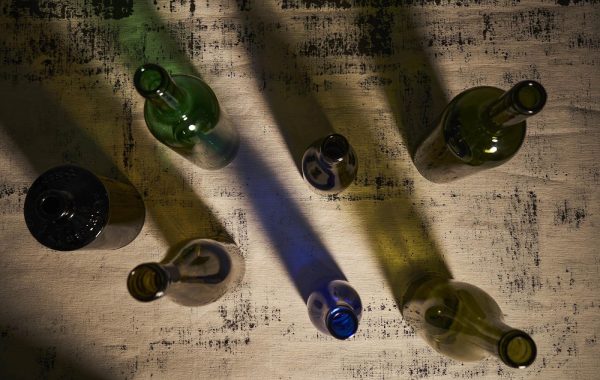
One such photographic series, A Glass of Light by digital imaging specialist Olga Bondarenko, was inspired by the paintings of Giorgio Morandi and depicts not so much the glass bottles themselves as the space, lines, and play of light between them. Olga talked about how she created the series of photographs and held her own exhibition Still? Life? in Toronto.
Origins of the Glass of Light Concept: From Observation to Abstraction
Olga Bondarenko was born into a creative family and, from an early age, watched her mother paint in her studio, where Olga herself was attending art classes. Brushes and canvases became the closest means of self-expression, and it was there that Olga first began to understand how light and shadow fall onto a two-dimensional surface and turn it into a three-dimensional image with its own story.
Olga studied drawing and painting at AZ Art Studio Kharkiv and was inspired by many artists, but she was particularly drawn to the works of Giorgio Morandi. The Italian painter and printmaker was known for his oil-painted still lifes and etchings. His technique was minimalist — quiet and calm in tone, yet highly distinctive. In form, his compositions resembled early Picasso, while in spirit they echoed the frescoes of the Italian Renaissance, with their meticulous attention to detail.

He depicted bottles, vases, and jugs in endless variations — seemingly simple, everyday objects. Yet in each work, he managed to do something special: he experimented with volume, form, and the play of light and shadow, creating the impression of weightless, floating objects with a meditative calm.
Olga Bondarenko captured that same feeling — the “flight” of grounded things. She began photographing colorful bottles in different compositions, at first without any clear goal or concept. She was fascinated by the way light passed through glass surfaces. While working part-time at a Japanese restaurant in Toronto, she collected bottles and experimented with photographing them from different angles. Over time, these studies grew into the A Glass of Light series — a meditative exploration of light, objects, and the silence that surrounds them.
Technique and Composition: Bottles as Lenses of Light
The turning point in working on the A Glass of Light series came when Olga took a position as a Digital Imaging Specialist at the fine art printing studio Toronto Image Works. There, an unexpected incident inspired her to continue experimenting with her images:
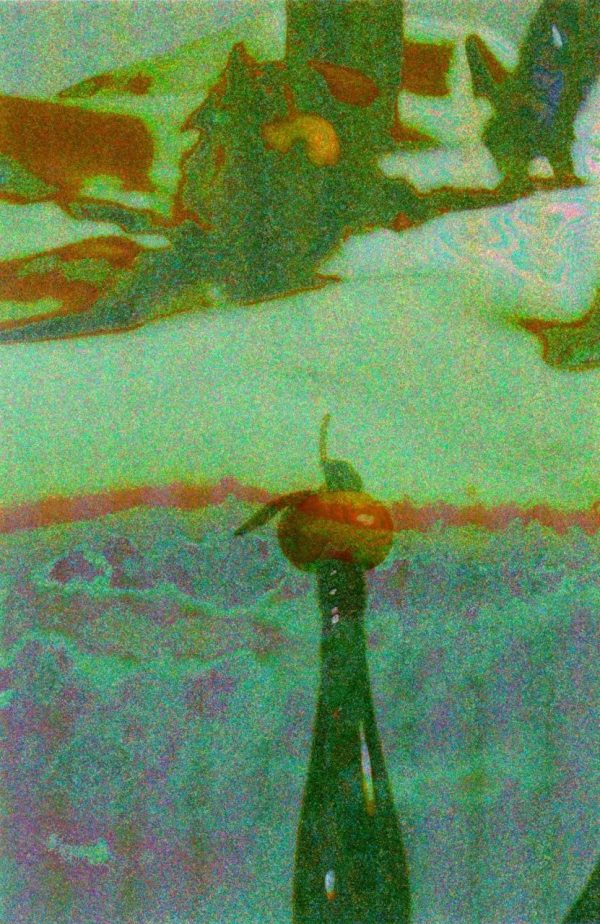
“I came across a strange glitch in the Chromira printer we used in the studio,” Olga recalls. “It works fine if you print 8-bit files, but once you load a 16-bit file — let’s just say the result is always a ‘surprise.’ While we were redoing some failed client files, I started wondering — what if I allowed these mistakes intentionally in my own work? What if I try printing the photos of the bottles this way? I tried it, and the result was bizarrely cropped images of the bottles.”

The photographer herself doesn’t consider this series to have much in common with Giorgio Morandi’s work, he merely inspired A Glass of Light. For Olga, it became an artist’s impulse — to try, to explore, to experiment both with and without the machine. As she notes, without asking “what if,” you never find the interesting path. In many ways, this is what made the series metaphorical: light refracts through glass just as technology refracts our reality — and the photographer, with her own hands, can bring it back to a state of quiet contemplation.
Emotional and Philosophical Dimensions: The Space Between Form and Feeling
Over time, the A Glass of Light series evolved into a separate project — a photographic pop-up exhibition titled Still? Life?, dedicated to curiosity and the joy of experimentation. “I didn’t aim to impress the audience,” says Olga Bondarenko, “I wanted to evoke a sense of lightness, play, and to show that art doesn’t always have to be a grand statement or a search for meaning.”
The title Still? Life? plays with the idea of the classical still life. It poses a question: does “still life” remain still when a machine becomes part of its creation? This interplay between tradition and technology, between chance and intention, became the emotional foundation of the exhibition.
The exhibition took place in a cozy setting, accompanied by live house and dance-pop music. Olga aimed to create a relaxed atmosphere where people could gather around the photographs and not just contemplate them as in a gallery, but also connect, discuss experiments, and share their most unusual ideas about art.
The Continuing Conversation Between Past and Present
A Glass of Light and Still? Life? do not claim to continue Morandi’s style, but they connect his ideas with contemporary experiments in photography, including those made with the help of machine errors. All the works are united by the same sense of curiosity and desire to play with light and form.
“When precision meets chance, something alive is born between them,” says Olga Bondarenko. “That’s what makes the artist’s path interesting.”