Byline: Will Jones
In the fast-paced world of performing arts, success is about storytelling, cultural memory, and emotional resonance. Crafting this narrative requires a strategy that blends artistic intuition with operational expertise and cross-cultural fluency. Jiashan He navigates a space where overlooked emotions, identities, and stories find center stage. We spoke with her about her cross-cultural inspirations and how she addresses the challenges of bridging cultures through the arts.
During her early years, Jiashan served at the China & France Cultural Festival, a role that demanded both precision and diplomacy. “I handled press releases, coordinated with the media, and even designed merchandise,” she recalls. But the real challenge came when negotiating with officials from both China and France.“Bridging these worlds required constant translation—not just of language, but of expectations and culture.”
She quickly realized that cultural and organizational differences could cause confusion. To address this, she researched prior French programs in China. This helped her understand the formal protocols and expectations on both sides. This helped her see some of the differences in style and communication between the teams. In practice, this meant carefully translating messages, clarifying contexts, and ensuring all stakeholders understood the rationale behind each decision. “For example, the French side might expect a certain protocol for event production, while the University usually has a more intricate and detailed procedure of event collaboration with partners outside from the university system. Left unaddressed, those differences could easily lead to confusion or delays,” she explained.
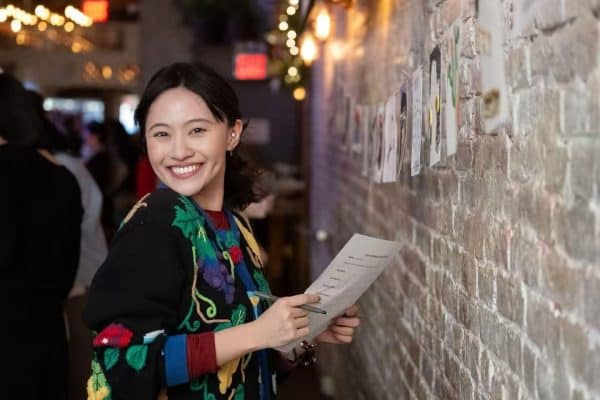
Trained as a dancer, Jiashan brings a unique blend of arts management and creative insight to her work. “Dancers are taught to combine sensation with logical thinking, to be aware of body, rhythm, space, and emotion. When I shifted into arts administration, I realized that the role demands far more than traditional business skills, it requires an understanding of artistic expression and a conviction in the mission and vision of the organization or project. My dance background not only taught me how to be sensitive to my body and my own artistic expression, but it also developed in me a deeper understanding of people, society, and how art connects to the world. In administration, that means being intuitive about the needs of artists and audiences alike, noticing details that others might overlook and responding with empathy.”
On ChunWai Chan (Principal Dancer at New York City Ballet)’s upcoming tour in China, Jiashan plays a crucial role as the administrator alongside two producers. “This production brings together artists from very different cultures,” she says. “Our goal is for audiences to experience the art form beyond borders. My job is to make sure donors understand not just the production, but the human story at its heart—why this cultural dialogue matters, and how it invites people to connect despite differences.” She leads sponsorship strategy and corporate partnerships with a fundraising goal of approximately $400,000 across Shanghai, Guangzhou, and Huizhou, while also managing the logistical backbone: budgeting, scheduling, and coordinating travel across multiple cities.
In marketing, she crafts messaging that respects cultural uniqueness while speaking a universal language of curiosity and empathy. Through cross-cultural outreach, she draws in audiences who might not otherwise feel connected to a performance, creating moments in the theatre where attendees glance at the person next to them and experience recognition: “We are different, but we are also human together.”
When asked about aligning marketing, development, and production, she shared an idea: everyone needs to work toward the same story, even if we’re holding different parts of it. While working at PACDA, a community-rooted, culturally specific organization growing into a mature nonprofit model, Jiashan focused on creating clearer program categorization and an external communication framework. “This ensured messaging consistency, helped audiences understand the organization’s scope, and clarified potential partners’ roles.”
On the development side, Jiashan He led continuous efforts in promoting and reframing mission-driven giving opportunities, helping translate PACDA’s artistic and cultural values into accessible public narratives, such as MHMD(My Heritage My Dance Fund). These activities invited audiences to support cultural preservation through meaningful participation rather than one-time transactions.
“For me, that’s the core of alignment: marketing isn’t just promotion, development isn’t just ‘asks,’ and production isn’t just delivery. They are three expressions of the same mission, and the more consistently we tell that story, the more trust we build over time.”
As the curtain rises on each performance, Jiashan steps back and watches cultures meet on stage. “Communication isn’t just a tool; it’s the stage upon which collaboration and shared vision come alive. And while I’m still at the beginning of my journey, I carry with me the belief that when people connect and listen, the stories we bring to life can truly resonate across cultures and beyond the stage.”