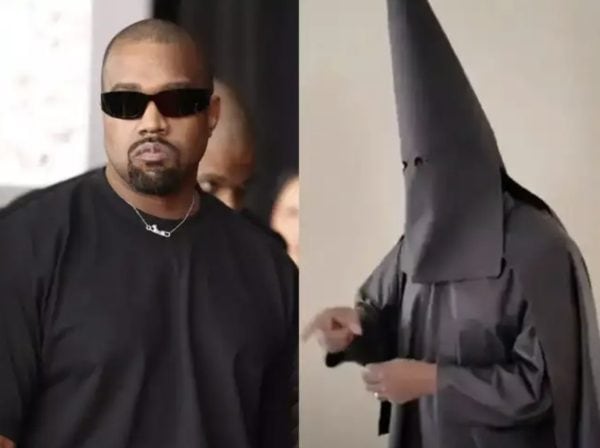
Kanye West has taken a public step toward accountability, placing a full page advertisement in The Wall Street Journal to apologize to those he says he has hurt through his words and actions in recent years. In the ad, West expresses regret for behavior he describes as bigoted and harmful, specifically acknowledging his past association with Nazi symbolism as something he deeply condemns.
Writing directly to the public, West attributes part of his personal unraveling to a serious car accident nearly 25 years ago, which he says caused undiagnosed damage to his frontal lobe and contributed to long standing mental health struggles, including his diagnosis of bipolar type 1 disorder. While offering that context, he makes clear that it is not an excuse for the harm he caused.
“I lost touch with reality,” West wrote. “Things got worse the longer I ignored the problem. I said and did things I deeply regret. It does not excuse what I did though. I am not a Nazi or an antisemite. I love Jewish people.”
West also addressed the Black community, describing it as the foundation of his identity and expressing sorrow for betraying that trust. “I am sorry to have let you down,” he wrote. “I love us.”
Read the full ad from Ye in the Wall Street Journal HERE
The apology follows years of inflammatory behavior that included selling merchandise bearing swastikas, making threats against Jewish people, and releasing a song last year titled “Heil Hitler.” Those actions sparked widespread condemnation and severed relationships across the entertainment and business worlds.
This is not the first time West has attempted to apologize for past remarks. In November, he issued an apology to the Jewish community during a meeting with Rabbi Yoshiyahu Yosef Pinto. He also publicly apologized in 2018 for comments about slavery during an interview with Chicago radio station WGCI. Still, the ad in The Wall Street Journalmarks one of his most formal and direct attempts to take responsibility in a national forum.
West emphasized that he is not seeking sympathy or special treatment, but rather asking for the opportunity to change. “I’m not asking for a free pass,” he wrote. “I aspire to earn your forgiveness. I write today simply to ask for your patience and understanding as I try to find my way home.”
Whether the apology will lead to lasting change remains to be seen. But in his own words, West framed the message not as a defense of his past, but as an acknowledgment of the pain he caused and a stated commitment to do better moving forward.