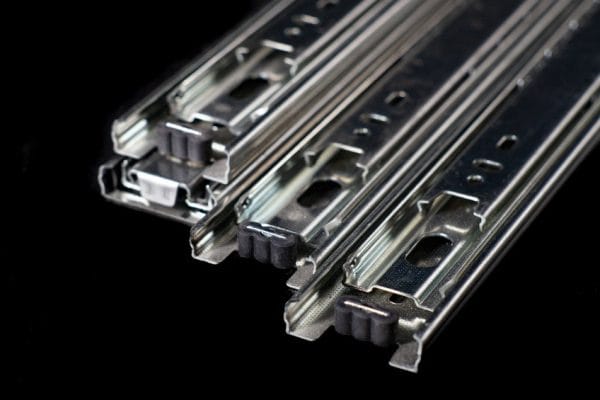
In modern industrial design, components that look simple often hide a wealth of engineering complexity. Telescopic slides are a perfect example. They are inconspicuous mechanisms inside many machines, transport systems, and protective enclosures. These precise devices enable smooth linear motion under heavy loads and in all kinds of conditions. For business and industrial decision-makers, understanding how telescopic slides work and where they are most useful is essential for building reliable, long-life systems.
What Makes Telescopic Slides an Engineering Achievement
Telescopic slides are engineered to extend and retract, carrying heavy loads while remaining stable. Unlike basic drawer runners, industrial telescopic slides must handle dynamic forces, vibration, and frequent use cycles. In the industries where telescopic slides are typically used, they are critical equipment that must function under high stress conditions without deformation or binding. This is achieved through carefully profiled material science, cutting-edge design, and tight manufacturing tolerances.
A trusted Manufacturer of industrial telescopic slides focuses on durability first. Material selection, surface treatments, and bearing design all play a role. The goal? Ensuring peak performance in harsh environments with vibration, contaminants, temperature swings and humidity. These range from factory floors to outdoor installations to transport systems.
Applications Across Critical Industries
Here are a few places where telescopic slides are used:
ATMs and Secure Access Systems
In ATM design, telescopic slides are used to extend cash handling modules and service trays. Reliability is non-negotiable. Slides must enable precise movement, resist tampering, and perform without maintenance for thousands of service cycles. Smooth extension also reduces maintenance time and lowers operational costs.
Rail Transport and Infrastructure
Rail applications demand components that withstand constant vibration, temperature fluctuations, and heavy loads. Telescopic slides are commonly used in under-seat systems, electrical compartments, and maintenance access panels. In these contexts, strength and corrosion resistance are critical engineering requirements that must be incorporated into each unit.
Industrial Machinery and Automation
Within industrial machinery, telescopic slides enable access to tooling, control systems, and moving assemblies. Using telescopic slides in these kinds of applications allows engineers to design compact machines that still offer full serviceability. A reliable Manufacturer of industrial linear guide rails also comes into play in this case. When paired with linear guide rails, telescopic systems can be optimized for both linear precision and heavy-duty extension.
Protective Covers and Safety Enclosures
Protective covers rely on telescopic slides to shield operators while still allowing access for inspection or maintenance. Smooth, controlled motion matters to prevent misalignment or some mishap. In regulated industrial environments, this contributes directly to compliance and risk reduction. There are a few places where workplace safety is paramount.
Electronic Racks and Data Systems
Electronic racks in industrial or transport settings require stable extension, carrying servers, control units, and power systems. Telescopic slides support high loads while maintaining stability and alignment. This matters for protecting sensitive electronics from shock and uneven stress during maintenance operations.
Aeronautics and Advanced Engineering
In aeronautics, weight optimization and precision are of utmost importance. Telescopic slides find usage in storage systems, maintenance access panels, and all sorts of other specialized equipment. Here, engineering excellence translates directly into safety, efficiency, and long-term reliability.
Why Engineering Quality Matters in Procurement
For users, telescopic slides are not interchangeable parts. Poorly engineered slides wear quickly, suffer misalignment, and cause high rates of system downtime. Conversely, high-quality designs reduce lifecycle costs, improve safety, and support scalable system design.