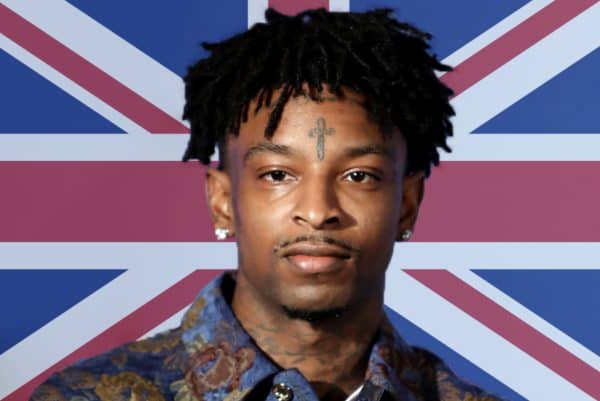
Long before “ICE out” became a protest chant at the Grammy Awards, and long before Immigration and Customs Enforcement became one of the most controversial arms of the U.S. government, rapper 21 Savage found himself at the center of a national immigration debate after being arrested by ICE in 2019. The incident didn’t just shock the music world. It highlighted deep tensions surrounding immigration policy and enforcement that continue to reverberate in 2026.
The February 3, 2019 operation in metro Atlanta began as a routine law enforcement action targeting individuals for local charges. But it quickly became a nationwide headline when federal agents from ICE revealed that She’yaa Bin Abraham-Joseph, the artist known globally as 21 Savage, was not actually a U.S. citizen. Instead, ICE officials stated he was a British national who had entered the U.S. legally as a teenager in 2005 but had remained in the country after his nonimmigrant visa expired in July 2006.
The arrest came as a shock to many of the rapper’s fans. For years, 21 Savage had built a public persona as an Atlanta native, deeply rooted in the city’s music scene and community. His legal team later clarified that he had lived in the U.S. since childhood, brought here by his family when he was young, but was unaware of how the immigration system would affect him as an adult.
Legal experts at the time described his detention as a “targeted operation,” a phrase that underscored how ICE was increasingly using its powers to reach deep into immigrant communities. The agency placed Abraham-Joseph into removal proceedings, triggering a legal battle that played out in federal immigration court.
His arrest sparked immediate debate: supporters called it proof that immigration enforcement had overreached, while critics said ICE was simply enforcing existing law. Voices in the Hip Hop community and beyond rallied behind him as an emblem of broader immigrant struggles, especially for individuals who grew up in the U.S. yet lacked legal status through no fault of their own.
Fast forward to the present, and immigration enforcement remains one of the most controversial topics in American politics, in no small part because of policy directions under President Donald Trump’s administration. Since returning to the White House, Trump has pushed for an aggressive ICE enforcement agenda that goes far beyond border towns. In cities like Los Angeles, Chicago, Minneapolis, and New York, federal authorities are conducting high-profile operations and prioritizing deportations in urban centers, drawing criticism from activists, city officials, and civil liberties advocates alike.
Critics argue that the tone and scale of today’s enforcement, including prioritizing arrests in Democratic-run cities and expanding ICE’s role domestically, mirrors the pattern that thrust 21 Savage into the spotlight. Nationwide protests and movements have emerged not only calling for due process and accountability but also challenging the way ICE carries out its duties. In Minneapolis, grassroots groups have mobilized to track and resist immigration sweeps, providing legal support and organizing protests in response to aggressive federal action.
These developments come amid a broader environment where immigration policy is increasingly front and center politically. Recent Reuters coverage notes that Homeland Security is deploying body cameras to every field officer in Minneapolis after public backlash over enforcement shootings involving ICE agents — a move supported by the Trump administration even as civil rights advocates criticize it as insufficient without deeper reform.
Even as enforcement increases, polls show growing public skepticism about ICE tactics. The focus on sweeping up undocumented immigrants, including those without criminal histories, has alarmed many Americans, including independents and members of both major political parties. Critics argue that prioritizing deportations and aggressive raids undercuts due process and breeds distrust in immigrant communities nationwide.
For 21 Savage, the aftermath of his ICE arrest became a defining moment in his life and career. While he was eventually released on bond and continued his music, the case became a flashpoint for discussions about immigration, identity, and belonging in America. It reminded the nation that the modern immigration system can entangle people who have lived in the U.S. for virtually their entire lives — an issue that remains deeply contentious as enforcement policies evolve.
In a moment when immigration is both an election year battleground and a social justice flashpoint, the story of 21 Savage’s arrest stands as a reminder: laws on the books, government priorities, and how enforcement plays out on the ground can collide in ways that reshape lives long before they reshape policy.