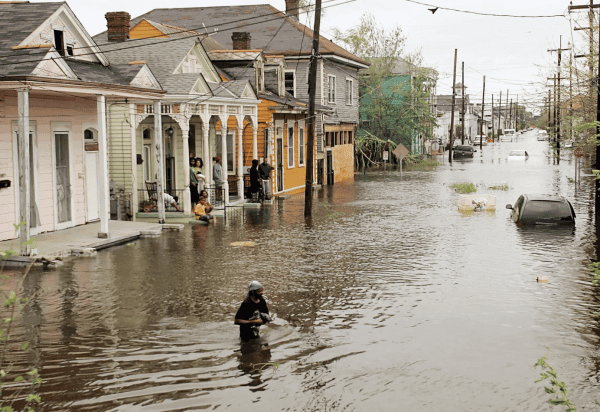
Today marks 20 years since Hurricane Katrina devastated the Gulf Coast, leaving a mark on history that still weighs heavy on New Orleans and surrounding communities. On August 29, 2005, the Category 5 storm made landfall, unleashing catastrophic flooding, wind damage, and destruction that displaced more than a million people and claimed over 1,800 lives.
Katrina wasn’t just a natural disaster. It exposed the deep cracks in America’s infrastructure, politics, and social fabric. The levee failures that drowned 80% of New Orleans highlighted years of neglect, while the government’s delayed response became a symbol of systemic failure. Images of families stranded on rooftops, survivors pleading for help at the Superdome, and entire neighborhoods washed away remain seared into collective memory.
For the people of New Orleans, especially in majority-Black neighborhoods like the Lower Ninth Ward, Katrina was more than wind and rain. It was the loss of homes, culture, and security. Many survivors never returned, while others rebuilt brick by brick, holding onto the city’s soul through music, food, and resilience.
The storm also had a lasting impact on Hip Hop and popular culture. Kanye West’s infamous declaration, “George Bush doesn’t care about Black people”, on live television became one of the defining moments of the tragedy, amplifying the frustration and pain of millions who felt forgotten in their time of need. Artists from Lil Wayne to Jay-Z used their platforms to raise awareness and support, ensuring the struggle of New Orleans was heard worldwide.
Two decades later, Katrina’s legacy is a reminder of both tragedy and resilience. The Gulf Coast continues to rebuild, and the spirit of New Orleans, the birthplace of jazz, bounce, and cultural richness, remains unbreakable.
We remember the lives lost, honor the survivors, and reflect on a storm that changed America forever.