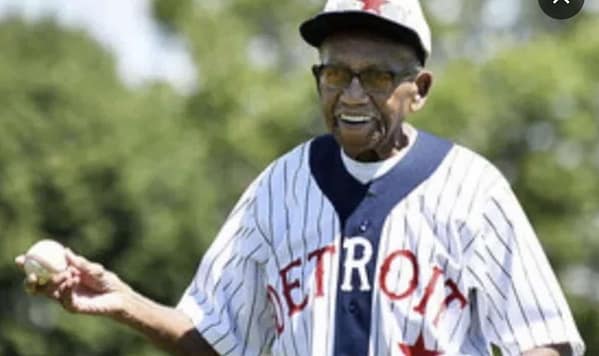
Ronald “Schoolboy” Teasley, one of the last living links to baseball’s segregation-era Negro Leagues and a trailblazer both on and off the field, died today at the age of 99. Teasley’s passing marks the end of an era for a generation of players whose contributions helped shape the game long before full integration into Major League Baseball.
A native of Detroit, Michigan, Teasley earned his “Schoolboy” nickname early in life for his athletic prowess and youthful dominance in local games against older competition. He excelled at Northwestern High School before attending Wayne State University, where he famously batted .500 during the 1945 season — a mark that still stands in school history. After serving in the U.S. Navy during World War II, Teasley pursued professional baseball at a time when opportunities for Black players were still limited.
In 1948, Teasley signed with the Brooklyn Dodgers organization shortly after Jackie Robinson broke baseball’s color barrier. Although his time in the Dodgers’ system was brief, he soon joined the New York Cubans of the Negro National League, where he played during the final years of the league before its dissolution. While official records list him going 2-for-7 with a double and two RBIs in his documented appearances, Teasley maintained that his contributions on the field extended far beyond the statistics that survive today.
Throughout his life, Teasley was more than just a ballplayer. After his professional baseball career, he returned to Detroit and devoted more than three decades to education and coaching, shaping young minds and nurturing athletic talent at multiple schools in his hometown. He also earned both a bachelor’s degree and a master’s in education, leaving a lasting impact in classrooms and on playing fields alike.
Teasley’s role in preserving baseball history extended well into his later years. As one of the oldest living former Negro Leagues players, he helped amplify the voices and stories of men whose accomplishments were long overlooked by the broader baseball community. In 2020, Major League Baseball retroactively recognized the Negro Leagues as major leagues, finally giving statistical acknowledgment to players like Teasley whose efforts were foundational to the sport.
Bob Kendrick, president of the Negro Leagues Baseball Museum, honored Teasley’s legacy, noting his embodiment of character and excellence both on and off the diamond. Teasley’s life bridged eras — from segregation-era ballparks to schools, coaching fields, and community leadership — representing a lifetime of perseverance, principle, and passion for the game.
At the time of his passing, Teasley was the second-oldest living Negro Leagues player, a testament to a remarkable life that spanned nearly a century of American and baseball history. He leaves behind a legacy carried forward by his family, former students, and the countless young athletes and fans inspired by his story.
Ron “Schoolboy” Teasley’s name will live on as a reminder of the resilience and excellence of the Negro Leagues and the generations of players whose love for the game helped shape modern baseball.