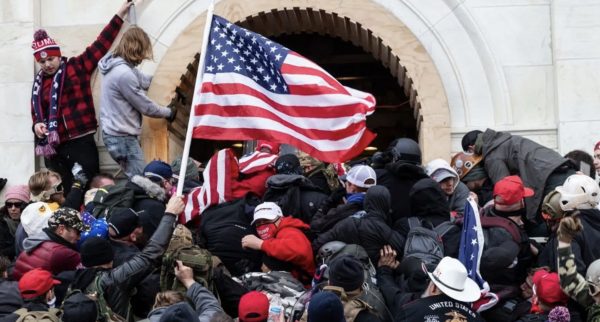
Today marks the five-year anniversary of the January 6, 2021 attack on the United States Capitol, a day etched into American history as both a shock to the democratic process and a persistent flashpoint in national political conflict. On that day, a crowd of supporters of then-President Donald Trump breached the Capitol building as Congress met to certify the 2020 election results, resulting in violence, property damage, the deaths of several people, and injuries to more than a hundred law enforcement officers.
The attack was unprecedented in modern U.S. history. It disrupted a peaceful transfer of power and challenged basic norms of democratic governance. Images of rioters breaking windows, roaming the Senate chamber, and confronting police remain indelibly tied to the event’s legacy.
In the years since, what Jan. 6 meant and continues to mean has become deeply contested territory in American politics and public discourse. For many, the event remains a stark warning about the fragility of democratic norms and the danger posed by violent extremism tied to political ideology. Advocates for commemorating the day argue that its memory must be preserved and learned from, especially given ongoing efforts to downplay or distort what happened.
On this fifth anniversary, the nation is once again polarized over how to frame Jan. 6. Democratic lawmakers have reconvened committees to review testimony from the Capitol attack and to counter efforts to rewrite the historical record, emphasizing the need to reinforce facts and understanding of the violence and its causes. They also highlight that hundreds of those involved were pardoned or had sentences commuted by the administration that followed, a decision that critics say undermines accountability and signals tolerance for political violence.
At the same time, some political voices and segments of the public have sought to reinterpret the event as less serious or to criticize the original criminal prosecutions, framing it as overblown, mischaracterized, or motivated by political bias. As a result, the conversation around Jan. 6 often feels less about shared history and more about competing narratives of legitimacy, justice, and political identity.
For others, the attack was not only a political explosion but an expression of deeper strains in American society. It brought to the surface long simmering tensions over race, power, truth in public life, and the role of conspiracy theories in shaping political behavior. What one group sees as an exercise in freedom of speech and protest, another sees as a violent attempt to overturn a democratic outcome.
The anniversary also raises uncomfortable questions about what “freedom” means in America. Is it a collective right grounded in peaceful civic engagement and respect for institutions? Or is it interpreted by some as an unrestrained license to challenge or even destroy those institutions when outcomes are unsatisfactory? Jan. 6 remains a case study in how far political conviction can be pushed before it becomes a threat to the very system that allows those convictions to be expressed.
As the country marks this milestone, there are no official bipartisan memorial events planned on Capitol grounds. The missing plaque meant to honor the law enforcement officers who defended the building, approved by Congress but never publicly displayed, stands as a metaphor for the broader struggle over how the event will be remembered and understood.
Five years later, what Jan. 6 becomes in the American story will depend not just on facts and archival footage, but on how the nation chooses to engage with truths that are difficult, contested, and deeply consequential. Whether it stands as a warning, a wound, or a rallying cry — its legacy is still very much unfolding.