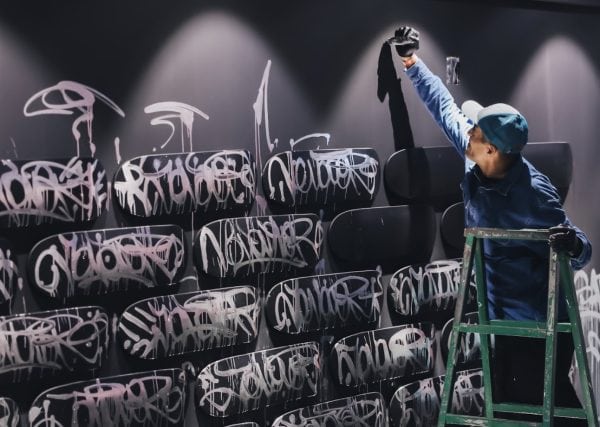
Miami Art Week is getting a heavy dose of graffiti history and evolution as the Museum of Graffiti celebrates its sixth anniversary with a complete exhibition rework. The museum’s new two-part show, Origins, bridges the raw beginnings of New York train writing with the refined global presence of graffiti as fine art. On one side, it features unseen works from 1973 by United Graffiti Artists (UGA) legends PHASE2, FLINT 707, SNAKE 1, and COCO144; pieces that helped graffiti break into the gallery world for the first time. On the other, it introduces El Tiguere, a new solo exhibition by Paris-based Harlem native JonOne, who will also paint live inside a temporary studio installed within the museum.
The Origins section takes visitors straight back to graffiti’s earliest DNA with an immersive recreation of a 1970s hardware store that doubles as a working Rust-O spray paint shop. It’s a nod to the underground resourcefulness that fueled the culture, when aerosol, scavenged caps, and the city itself were the tools of rebellion and creativity. “Tracking down rare artifacts like this was always part of our mission so that the true history of graffiti can be shared in the most authentic way,” said Allison Freidin, co-founder of the Museum of Graffiti.
Running parallel to Origins is JonOne’s El Tiguere, a title that channels Dominican street slang for the survival instinct of the hustler. The Harlem-born artist, who started bombing trains in the early 1980s before moving to Paris and becoming a significant force in contemporary abstraction, channels that spirit into dripping, high-energy canvases exploding with color and movement. His evolution from street writer to international art figure embodies the culture’s global reach;a testament to how far graffiti has come since its underground days.
For the first time in Miami, the museum will feature a functioning artist studio, integrating JonOne’s process into the show itself. On opening day, he’ll create live before the audience, blending raw spontaneity with the polished confidence of decades in the game. “I’ve been following Jon’s artistic journey since the 1980s in New York City and marvel at what he has accomplished with his signature tag,” said Museum of Graffiti co-founder and curator Alan Ket. “Once vilified, we now celebrate his artistic genius.”
The exhibition cements the Museum of Graffiti’s position as a living archive, honoring the pioneers who started the movement and showcasing the artists who continue to expand its legacy worldwide.